
Sky Planning was featured on ABC Radio Saturday Breakfast talking Third Spaces in Sydney — which are important community builders. Listen to the interview and read about why Third Spaces matter below.
When we think about cities, most of us picture two main spaces: home and work. But what about the third?
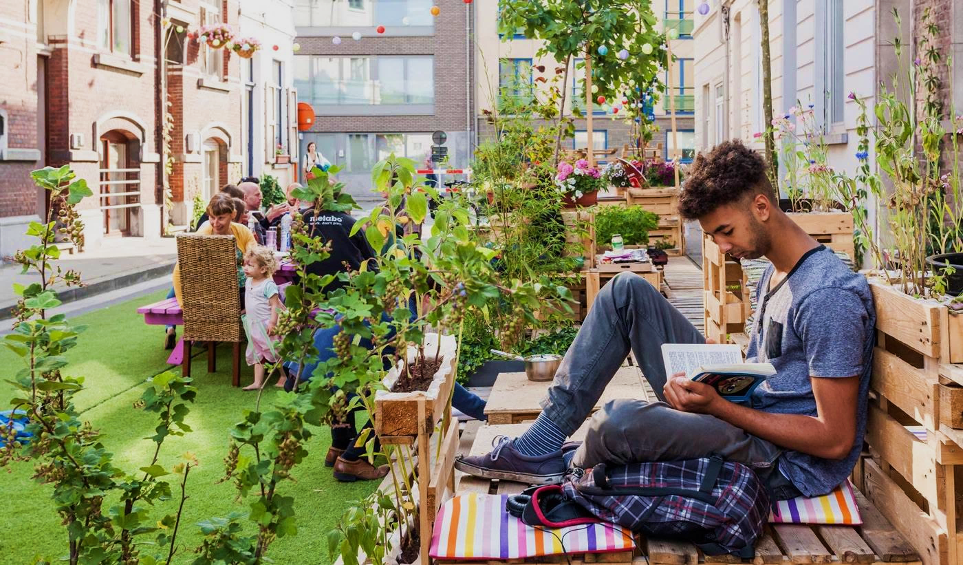
Third spaces are the public or communal places that sit outside of home (the first place) and work (the second place). They're the plazas, the parks, the swimming spots, the community lounges, and even the corner cafés where people linger without pressure to buy or move on.
The best third spaces make you feel comfortable, safe and welcome — like community living rooms. They're the places where we bump into neighbours, share a glance or a laugh with strangers, or settle in for a chat with friends. They encourage lingering, connection and serendipity. And in many ways, they're where the magic of society happens.
Why Third Spaces Matter
The evidence is clear: communities with strong social ties are healthier, happier and more resilient. People who know and trust their neighbours are more likely to help each other out in times of stress — whether that's a storm, a pandemic, or simply lending a cup of sugar.
But here's the kicker:
- Loneliness is more dangerous than obesity and as damaging to health as smoking 15 cigarettes a day.
- According to the 2024 Little BIG Social Connect Report, 46% of Australians have no regular contact with anyone outside their home.
- A staggering 22% of Millennials say they don't have a single friend.
Third spaces are one of the strongest antidotes to this crisis of loneliness. Neuroscience tells us that face recognition works at 50–70 metres, and at 25 metres we can pick up expressions and details. Those glances and fleeting acknowledgements in shared spaces are not trivial — they reduce loneliness and increase our sense of belonging.
And in a city like Sydney, where the cost of living is so high, communal spaces that don't require a monetary transaction are essential. Everyone deserves a place to connect, without needing to buy a ticket or a flat white.
How Does Sydney Score?
Sydney's record on third spaces is a mixed bag. Some neighbourhoods are rich with plazas, playgrounds and swimming spots; others feel starved of places to simply be. That said, things are improving.
Some exciting examples:
- Marrinawi Cove, Barangaroo (opened 2023): The first new harbour swimming location west of the Sydney Harbour Bridge in 50 years — a sandstone-edged cove with a shark net enclosure and shower facilities.
- Callan Park Tidal Baths, Iron Cove (due 2026): A $3.8 million swimming spot with ramps, pontoons and shark net protection, integrated beautifully into parkland.
And beyond the water, private developers are stepping up too. The Flour Mill in Summer Hill is a standout: hundreds of apartments built right on the light rail line, alongside a beautiful plaza, playground, and community room. The space is buzzing — proof that density and great third spaces go hand-in-hand.
How Do We Plan For Them?
The best third spaces aren't always the most expensive. Often, they come from bold but simple experiments. Take my local area, Canada Bay. In Drummoyne, council spotted two little-used streets and trialled a transformation using tactical urbanism: planters, barriers, and temporary furniture. Residents were invited to give feedback, and while a few grumbled about lost car spaces, most loved it.
The trial was so successful that council made it permanent — landscaped seating, shaded spots, even a table tennis table. My 10-year-old and I are there most weekends, coffee in hand, rallying over the net alongside our neighbours. It's a living example of how quick, low-cost trials can shift community culture.
Designing the Living Rooms of Society
Third spaces are more than "nice-to-haves." They are the living rooms of society — places that nurture wellbeing, inclusion and resilience. Whether it's a harbour pool, a plaza in Summer Hill, or a reimagined laneway in Drummoyne, these spaces help weave the social fabric that makes cities equitable and sustainable.
As Sydney grows denser, the role of third spaces will only become more important. If we want a city where everyone belongs, we must design for it — because where we gather, we grow.
At Sky Planning, we're passionate about creating communities that thrive. Get in touch if you'd like to talk about how third spaces can transform your project.